
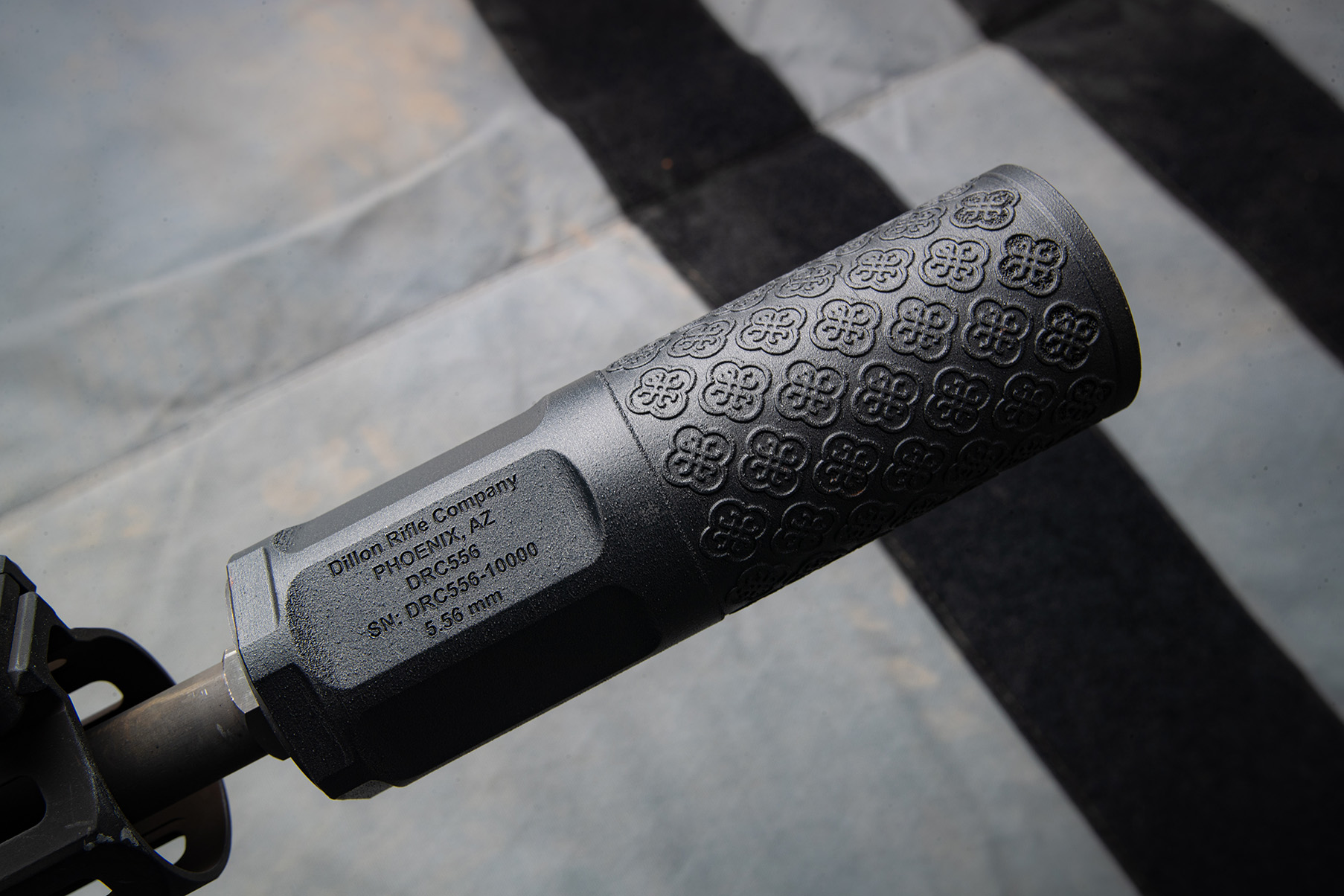
Some of the most important parts of a Dillon suppressor are the parts you never see.
Inside, PIP Technology changes how the suppressor manages the gas, pressure, and heat created when a round is fired. PIP stands for Purposely Induced Porosity. It is a different approach to suppressor design, built around controlled porosity and internal surface area.
Traditional suppressors use a series of closed chambers and baffles to slow and redirect expanding gas. PIP takes a different path. Carefully designed porous structures create additional pathways for gas to move through the suppressor while increasing the amount of internal surface area available to manage heat and pressure.
The result is a suppressor built around how gas moves.
PIP is made possible through additive manufacturing. This allows the internal architecture to be built directly into the suppressor, including areas where porosity can be varied to influence pressure and heat distribution. Instead of assembling a collection of separate parts, the design can be produced as a single, seamless structure.
That manufacturing process is important, but it is only part of the story. PIP is not 3D printing for the sake of being different. It is a design made possible by modern manufacturing and shaped by years of engineering experience.
The technology was developed for demanding applications before making its way into the Dillon Rifle Company suppressor platform. Independent testing and research have also brought attention to PIP as it continues to shape modern suppressor design.
PIP is the result of years of experience, modern manufacturing, and a willingness to rethink what a suppressor can be.